The reason why the surgical lamp can achieve shadowless effect is mainly due to the following design and technical characteristics:
Multiple light sources: Surgical lamps typically employ multiple light sources, which are often arranged in a circular or hexagonal pattern
. This configuration ensures that light is emitted from multiple angles, effectively eliminating shadows cast by the surgeon's hands, instruments, and overhead devices
Special reflection system: super deep lighting, perfect shadowless effect. The latest MXLED700/500, each LED is equipped with a lens refraction luminescence system, the overall design of the LED lamp head makes the beam gather into a high brightness uniform light column, thus ensuring a soft and uniform deep aggregation effect, to ensure the operation of high brightness, high depth of the face demand.
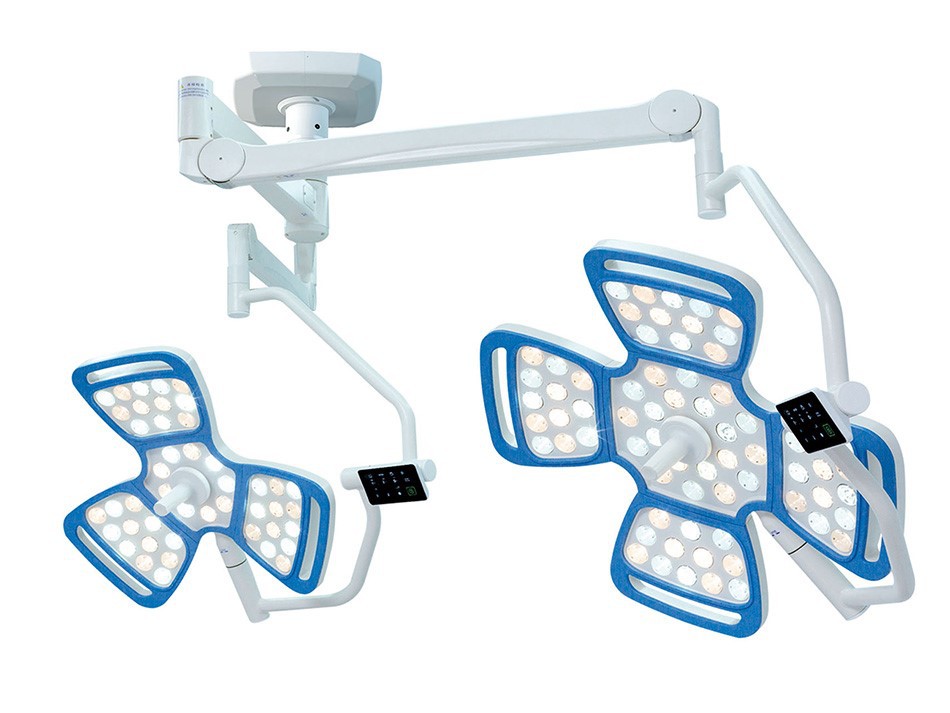
Cold light source: Our latest MXLED700/500, the lamp beads use the "OSRAM" 9th generation of medical grade LED cold light source, life can reach more than 60,000 hours, to meet the requirements of energy saving and environmental protection. There is no ultraviolet and infrared light in the spectrum, that is, there is no heat and no radiation, and there is almost no temperature rise in the doctor's head and wound area.
Adjustable: multi-point touch screen, humanized interface design. It is equipped with standard, endoscopic, superficial, cardiac, orthopedic, gynecological 6 lighting modes to meet the needs of hospitals for different surgical lighting.
In addition, the illuminance, color temperature can be adjusted, shading compensation shadow management, lamp head mutual control function.
High color rendering index (CRI) : A high CRI is essential for accurate color perception during surgery. Surgical lights are designed with a CRI of 96% or higher, ensuring that tissue and blood show their true color and allowing surgeons to make informed decisions
Through these design and technological features, the surgical lamp minimizes the shadow of the surgical area and provides a clear, unobsheltered view, which is essential for improving the quality and efficiency of the surgery.